WAN Connectivity
Uplink strategy: venue hand-offs, dedicated circuits, and how many paths the show actually needs. We validate the hand-off and the routing before anything downstream is built on it.
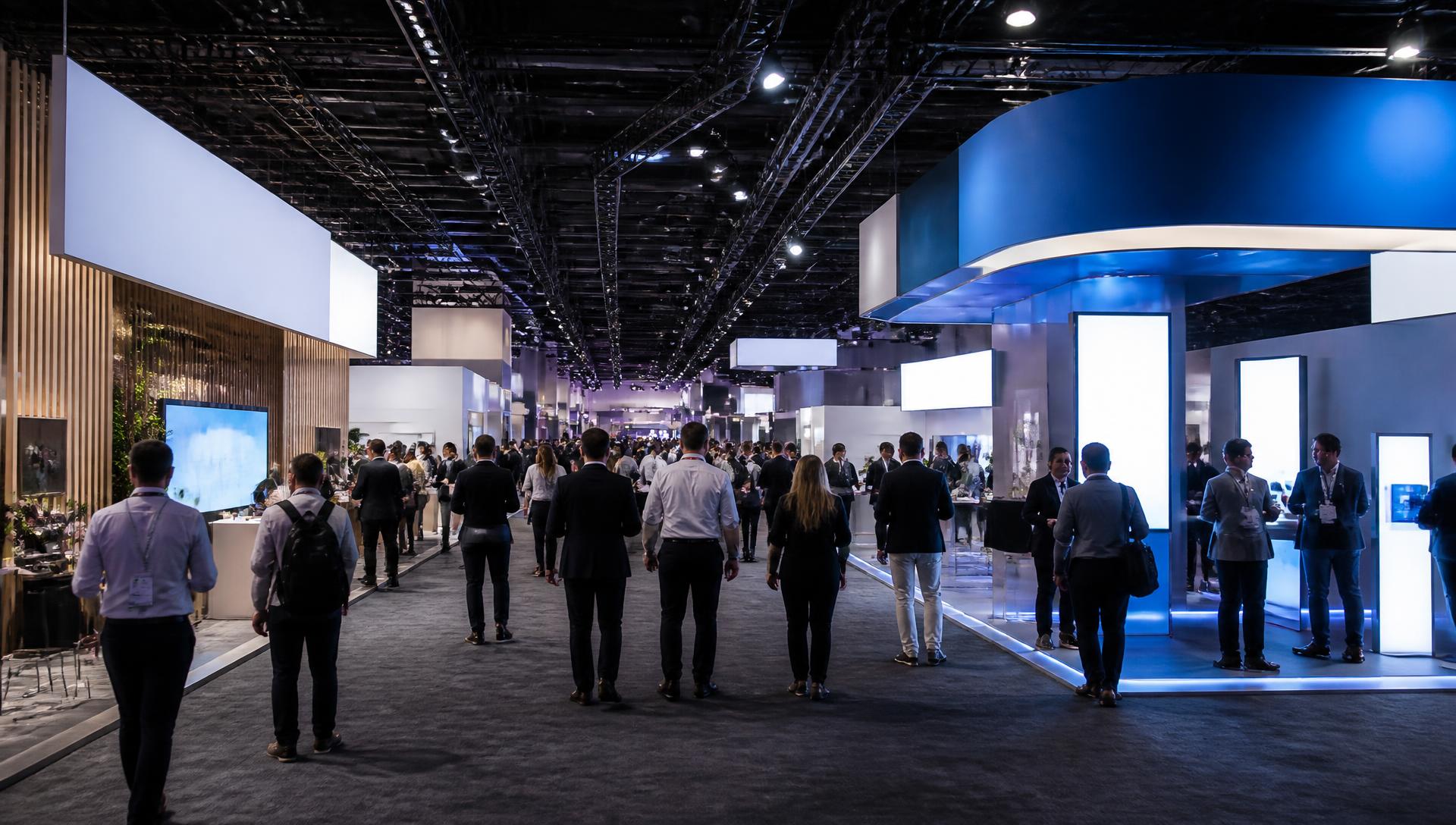
Engineering practice
Prime Cyber Technologies builds temporary enterprise networks for trade shows — not just wireless coverage. Architecture, segmentation, routing, security, capacity, redundancy, and on-site engineering, delivered on a show schedule.
The difference
A trade show network is a production system. It carries registration and badge scanning, payments, exhibitor demonstrations, streaming, voice, digital signage, and the personal devices of everyone in the building — inside a temporary space, on a fixed schedule, with no second chance at doors.
Treating that as "put up access points and share a circuit" is where shows fail. Our work is the layer underneath: how the uplink is delivered and protected, how the LAN is built and addressed, how traffic is separated and prioritized, how wireless is planned against real RF conditions, and how the whole thing is tested before it matters.
Disciplines
Uplink strategy: venue hand-offs, dedicated circuits, and how many paths the show actually needs. We validate the hand-off and the routing before anything downstream is built on it.
Core and edge switching, uplink topology, IP addressing, DHCP scoping, and wired Ethernet drops placed to the floor plan rather than to convenience.
Logical separation for registration, production, exhibitors, POS, staff, and attendees, with inter-VLAN routing policy that reflects who should actually reach whom.
Channel planning, channel width, transmit power, AP placement, band steering, and roaming behavior — designed for the hall's RF conditions and the expected client count.
Perimeter policy, client isolation where appropriate, and access rules that keep business-critical systems out of general traffic.
Bandwidth allocation and quality-of-service so priority applications keep working under load, backed by live monitoring throughout the run.
How a show runs
The same sequence on every project, scaled to the size of the show.
Applications, client counts, floor plan, production needs, venue constraints, and the schedule you are actually working to.
A written design: WAN strategy, switching topology, VLANs and addressing, wireless plan, security policy, and redundancy scope.
Equipment configured and burned in before it ships, so the floor time is installation rather than first-time setup.
Distribution, drops, AP mounting and placement per the RF plan, and labeled infrastructure the whole crew can read.
Throughput, roaming, segmentation, failover, and application-level checks against the requirements before doors open.
Monitoring and troubleshooting through show hours, then a controlled teardown, equipment recovery, and post-event review.
Who it's for
Go deeper
Answers
Have a show on the calendar?