Conference & Convention WiFi
Wireless designed around your hall, your agenda, and your attendee count — with RF planning, access point placement, and separate networks for staff, exhibitors, and attendees.
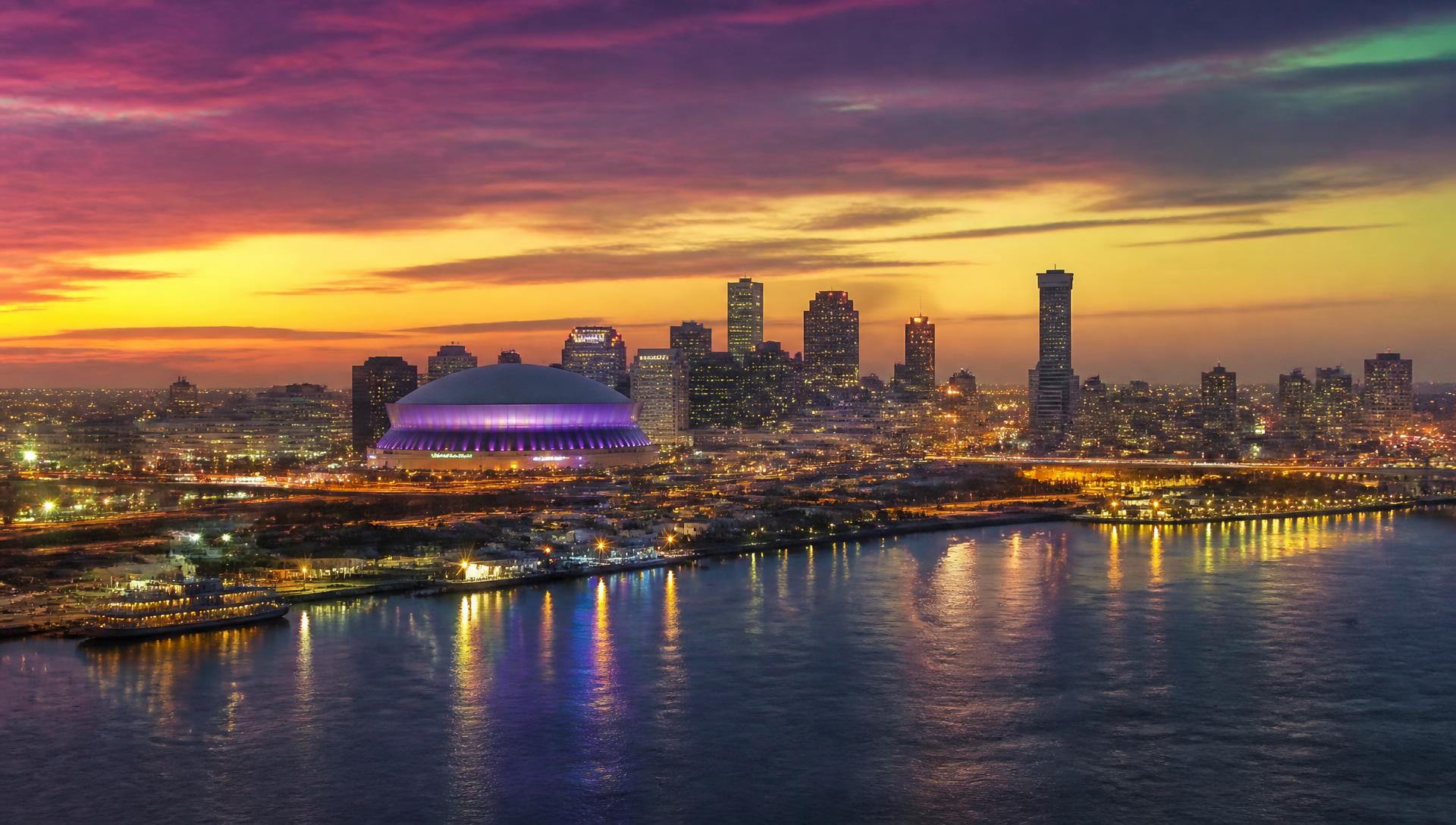
New Orleans, Louisiana
Prime Cyber Technologies is a New Orleans–based network engineering firm. We design, deploy, and operate the temporary networks behind trade shows, conferences, festivals, and activations across the city — then travel with the same team when your show moves on.
Local advantage
New Orleans hosts a heavy calendar of conventions, conferences, and festivals in venues that range from purpose-built exhibit halls to historic rooms and open ground. Being based here means we can walk a site before we design for it, coordinate directly with venue and carrier contacts, and get engineers on the floor quickly when a schedule changes.
Wireless designed around your hall, your agenda, and your attendee count — with RF planning, access point placement, and separate networks for staff, exhibitors, and attendees.
Circuit coordination and hardwired Ethernet to registration, production, back-of-house, and individual booths where a cable is the right answer.
Booth-level connectivity with per-exhibitor VLANs and on-floor support, so vendors and demo teams are not competing with attendee traffic.
Outdoor and non-traditional sites where there is no existing infrastructure: temporary distribution, weatherized gear, and coverage planned to the site map.
VLAN separation and firewall policy so payments, registration, and production systems are isolated from general-use traffic.
Local engineering presence through load-in, show days, and strike — not a drop-shipped kit and a phone number.
Where we work
Every one of these has a different traffic profile, a different risk profile, and a different physical environment. We plan for the specific one you are running.
Why engineering matters
Most venues provide some form of internet access. That service is generally built for ordinary building use — guests, staff, and light business traffic spread across a day. A production concentrates a very different load into a short window: badge scanning at doors, cashless payments, cloud-connected demos, streaming uplinks, and a dense crowd of personal devices all in the same hall at the same hour.
The gap is rarely raw speed. It is capacity planning, wireless design, and control. A production network needs to know how many clients will attach, which applications must never be starved, how traffic is separated, and what happens if the primary path fails. Those are engineering decisions, and they have to be made before load-in — not diagnosed on show morning.
Our approach is to gather requirements first, design a written architecture against them, deploy and test it before doors open, monitor it while the show runs, and strike it cleanly afterward. If venue-provided service can carry part of that design, we use it. If it cannot, we say so early and plan around it.
Go deeper
Answers
Planning an event in New Orleans?